3 of 3 | Part 1 Judge Yourself & Let No One Judge You | Part 2 Judge No One & Judge Others | Part 3 Judge God
“I choose the appointed time; it is I who judge with equity. When the earth and all its people quake, it is I who hold its pillars firm. To the arrogant I say, ‘Boast no more,’ and to the wicked, ‘Do not lift up your horns. Do not lift your horns against heaven; do not speak so defiantly.’ ”No one from the east or the west or from the desert can exalt themselves. It is God who judges: He brings one down, he exalts another. In the hand of the Lord is a cup full of foaming wine mixed with spices; he pours it out, and all the wicked of the earth drink it down to its very dregs.””
Psalms 75:2-8 (NIV)“If any man worship the beast and his image, and receive his mark in his forehead, or in his hand, The same shall drink of the wine of the wrath of God,”
“and great Babylon came in remembrance before God, to give unto her the cup of the wine of the fierceness of his wrath.”
Revelation 14:9-10 & Revelation 16:19 (KJV)
Where were you when I laid the foundations of the earth?
Even though much will be left unsaid, this is the final in the series. I love this picture I found for the post. I am mortal, lifting up scales to an eternal God.
An LDS friend told me her faith believes human souls are waiting in heaven for bodies. Hence, the need for large families, providing the bodies. I don’t know of Protestant faiths that believe their souls originated in heaven. Some believe it sparks to life at conception, but because God breathed life into Adam’s nostrils, I wonder if the first breath is significant. Some say our first and last intake “Yah” and exhales “Weh” makes the sound of God’s name, Yahweh.
I don’t want to focus on when the soul arrives, other than to say only God is immortal. It is arrogant thought to assume a part of us is inherently eternal. The idea of immortal souls didn’t come from Hebrew Scriptures; it came from Plato, and it’s understandable that we accept it because Greek philosophy shaped our Western thinking. The Bible Project talks about the word that is most often translated as soul here.
Return to dust, you mortals
You know the story—don’t eat from the Tree of Knowledge, or you will die. Was “die” hyperbolic? Did their soul/spirit die within their flesh at that moment? Are we assuming “you will surely die” meant God knew he would kick them out of the garden so they couldn’t eat the Tree of Life anymore, and then they would eventually die?
Job said his life came from the breath of the Almighty. After Jesus rose from the dead, he breathed on them and said, receive the Holy Spirit. So, I have wondered if this born-again breath is not connected to what perished in the garden.
All I understand is that, figurative or literal, access to the Tree of Life was granted and revoked in the garden of Eden, death entered, God desires none should perish (or die), but all would have eternal life instead—and the end of the book, Revelation 22 describes access granted to the Tree of Life again in our future so we will live forever.
It’s probably too ingrained in you, from the foundational philosophers of Western civilization, to let go of the idea that some part of you will live forever, naturally, in your own power, even in rebellion to God.
This is the context I am coming from. I do not believe any part of us is inherently eternal—and I’ve highlighted this to show my fearsome reverence for God, before I share my boldness on judging him.
“I said, ‘You are “gods”; you are all sons of the Most High.’ But you will die like mere mortals; you will fall like every other ruler.” Psalms 82:6-7
Taste, and see
- When you first turn to God, you have judged him worthy.
- Every time you submit, and believe his definition of sin, yielding a bit more of yourself to him, you are making a judgment that you can trust him.
- When you do not do what he commands, you are judging him untrustworthy.
We’re invited to taste and see that the Lord is good. An action that results in consideration, opinion, and finally declaring a verdict on God.
In my last post, I wrote about our divine desire for justice because we’re made in the image of the righteous judge. Do you think God would give us the desire for justice and the ability to judge, but then tell us not to use it on Him—as though the giver of that justice might not stand up to it?
This concept of measuring God is unfamiliar to me. And these are probably new thoughts for you if you were raised to fear God, hell, Satan, sinners, your parents, an unchecked government, the world, hip-hop, and yourself. But taste and see—how could you walk boldly into the throne of grace if you’ve always believed he is arbitrary, punitive, and unjust?
Look at the language God uses in Isaiah, “Come now, let’s us reason together.” This is a God who wrestles with humans. Moses and Abraham both verbally sparred with God to intercede for the ones they loved. Although love might be a strong word for what Moses felt for the Israelites…
Jeremiah has a humble posture when he comes to God and says he’d like to have a word with him, but look also at his boldness.
“Yet I would speak with you about your justice…
You will be in the right, O LORD, when I lay charges against you,
but let me put my case to you.
Why does the way of the guilty prosper?
Why do all who are treacherous thrive?”
Jeremiah 12:1
Is this not the cry of your heart right now? How much healthier to lay it out on the table than to pretend like you aren’t lifting scales and inspecting the balance, waiting to see what the Lord will do. Stand on the edge of the cliff with Abraham and the Lord and echo, “Will not the judge of the earth do right?”
Come now, first let us reason together ways not to judge God
Do not judge God by
- his leaders
- an (English) translation
- your limited knowledge
- how you think this story should end
- the people who smear his name
1. Do not judge God by his leaders, even the chosen ones like Saul
I mentioned last week that Eli had two sons who used their religious power in the temple to oppress financially and sexually. Eli knew about it and confronted them, but just as we saw in the recent SBC scandals (and have seen in many others) no one was punished and often not even restrained. Eli’s bloodline was supposed to be priests forever. God’s answer is that he will still honor his promise to the lineage, but the two guilty sons will die on the same day. Additionally, every descendant of theirs will die in the prime of life.
Eli still doesn’t punish them.
Samuel comes on the scene as a weaned child and in a sweet story hears God’s voice in the night. In the morning Eli wants to know what God said, but young Samuel doesn’t really want to tell him, “Uh, sir, God said your sins cannot be atoned…” Verse 14. They could not be atoned by anything Eli currently did in the temple. There was nothing set up under that priesthood that could atone for it.
But Eli convinces Samuel to be scary-honest. Verse 18, “So Samuel told him everything, hiding nothing from him. Eli replies, “He is the Lord; let him do what is good in his eyes.””
So great is the irreverence of Eli’s two sons, who have wielded religious power their whole lives, that they take the Ark of the Covenant out to the battlefield like God is also theirs to wield. 1 Sam 4 says the slaughter was great; Israel lost thirty thousand foot soldiers. The Ark of the Covenant was captured, and Eli’s two sons, Hophni and Phinehas, died (just as promised on the same day.)
When Eli hears his sons are dead and the Ark is captured—it is news of the Ark that devastates him. He was quite heavy. (Maybe he also benefited from those first-choice cuts of meat that his boys were stealing.) Eli falls back from his chair, breaks his neck, and dies. Then his daughter-in-law hears and dies giving birth. Already the family line is perishing in the prime of life. Eli had led Israel for 40 years.
God will deal with corrupt leaders—and keep his promises at the same time. That we want and need him to, illustrates how everything inside us cries out against the problem of sin and iniquity.
Rethinking Hell is a heady collection of essays from multiple scholars about conditional immortality. On page 216 note 35, one argues, “However, if God is the author of morality, God‘s own actions must ultimately be shown to conform to the moral principles God imposes on humanity…”
God presented Christ as a sacrifice of atonement…to demonstrate his righteousness. Romans 3:25–26. The fact that it’s a demonstration means it’s an invitation to observe and judge. God has come to an unbelieving world and put his character before us to win our fear, repentance, and love.
2. Do not judge God by translation philosophies
The Bible only says that it is useful for training, and not one jot of the law will pass away until everything is finished. The Bible does not say your understanding of the translation in your hand in inerrant.
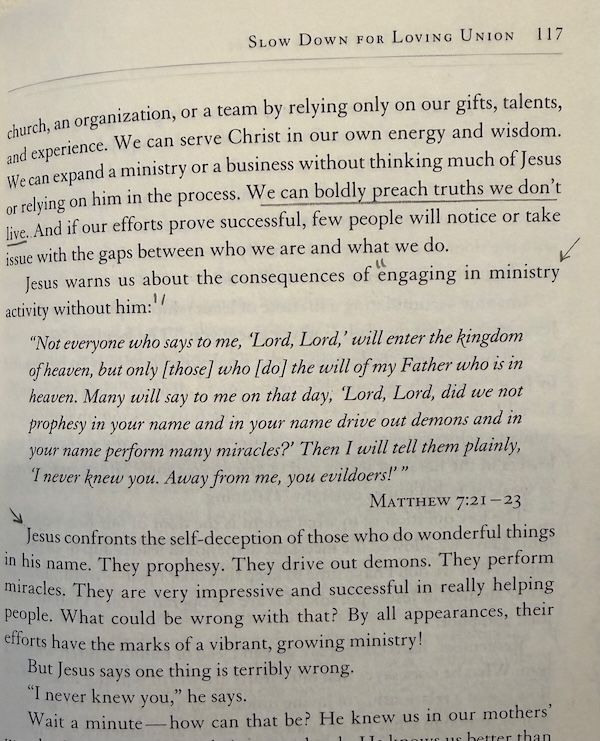
I’ve talked before about spiritual bypassing and cognitive dissonance by shrugging our shoulders and saying, “The Lord is mysterious, and I can’t trust me.” Growing up in church can be a little like the story of the Emperor’s New Clothes. This is how it seemed to me when my kids started talking. They pointed out things that I had practiced ignoring. I was in the habit of believing, “I can’t understand that. I’m sinful. I’m uneducated. God is sovereign.”
Christians are sometimes the crowd around the emperor, assuring the world they see elegant clothes with cheap phrases and pat answers. That hasn’t worked for the generations who’ve had access to a wider community and can ask the internet if they don’t buy the platitudes.
Sometimes the problem is in the translation itself or the translation philosophy. Like an idiom lost to time, some words would have made sense to the reader but don’t show up anywhere else in the Bible, so the nuance has to be assumed. Sometimes it’s taking the Bible too literally, when it so often uses hyperbole. Sometimes it’s not having a comparable word in the target translation. But people dedicate their lives to digging into those things, and we also have access to those scholars, books, podcasts through the internet.
This actually happened to me this week when I read David appointed his sons as priests. I was like, “Hold the phone, they aren’t Levites!” I already suspect some of David’s motivation and political maneuvering so I needed to know what was going on.
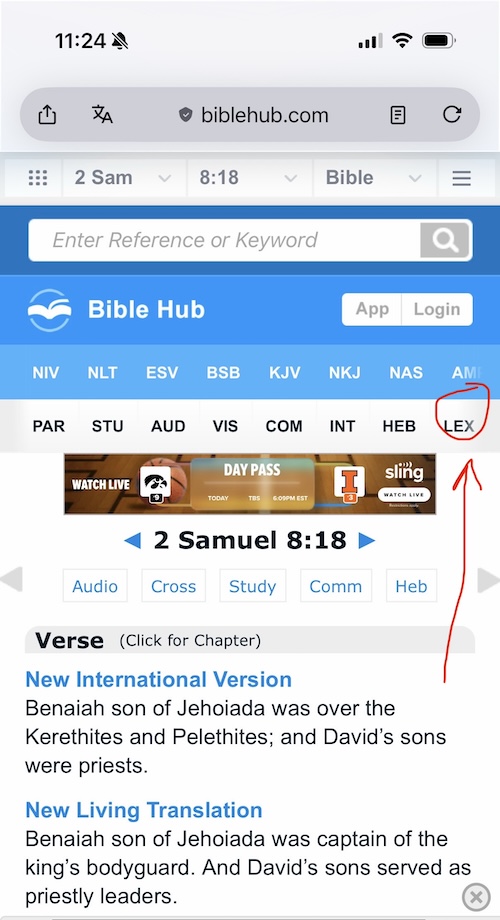
Apparently, this is a known discrepancy. Bible Hub is my favorite free resource for viewing multiple translations side by side. And the Lexicon button shows the Greek or Hebrew of the verse. If you click on a word, you can see where else it shows up in the Bible. The word used for priest regarding David’s sons does not refer to the official Aaronic Priesthood.
It’s more likely that they were officials put in charge of ministering. Neither is it the same word that we use for a kingdom of priests according to the order of Melchizedek.
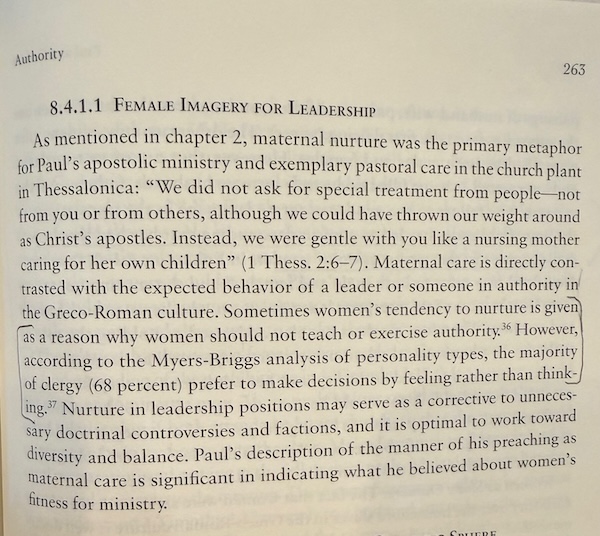
Appreciate the Internet with me for a minute. Previously, it would have taken a very special complementarian pastor to answer all of a girl’s questions without assuming she wanted to usurp his authority and/or sleep with him.
I know it’s not always that simple. Some things in the Bible have no clean answer yet. If you only have a few minutes to spend in a devotional each morning, the writer probably isn’t going to highlight the Psalm, “May his children be wandering beggars; may they be driven from their ruined homes,” with a touching personal story.
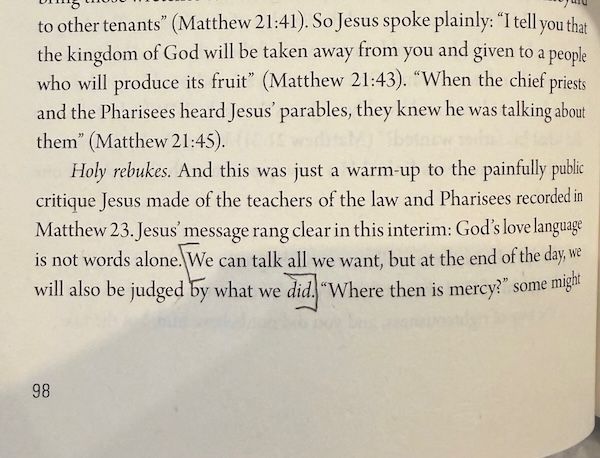
That’s because, translations aside, there is tension in the Bible. It is a place where often two things are true. Consider when Jesus broke the law, broke the written law and healed a man on the Sabbath. He said in John 7:24, “Do not judge by appearances, but judge with right judgment.” He’s telling the Pharisees here that there’s something else besides the literal interpretation of what they have written down in front of them.
3. Do not judge God by what you know that you know
Because we only know a part, we have to make tea and settle into the mystery.
Consider that scholars were cranky because John the Baptist didn’t eat and drink, and equally cranky because Jesus did eat and drink.
Peter knew Christ was the Son of the living God. You can see how this plays out ten verses after he declares that truth. Peter knows what he knows and therefore contradicts when Christ tells them is going to die. Don’t judge God by the pain and death that we know doesn’t need to be happening right now. Like Peter, we don’t understand everything going on, and all the powers at play.
I believe it was the human weakness in Christ that needed to rebuke Peter’s temptation to not go to the cross. There wasn’t a problem with Peter being his normal inquisitive, impetuous self. With careful words we still call out that we don’t see any clothes on the emperor. Suppressing the thought gets you sideswiped by the enemy’s philosophies. When you tell yourself, “God is God—shut up and take the free ticket out of hell!”
The spiritual person judges all things, but is himself to be judged by no one. 1 Corinthians 2:15
4. Do not judge him on how you think something should play out
I have an annual Hallmark Christmas movie night with a writer’s group. We call out story elements, write, and rewrite the story as we’re watching. Some of the gals are shockingly spot-on, as though they wrote the screenplay. I like to try guessing cheesy lines and say them just before the character does. But genre fiction follows a predictable story arc with mandatory components. There is a reason people love it. No surprises equals “emotionally safe.”
My dad asked me when I released Stone of Asylum, “If I read this story—is it going to be worth it?” Not counting the cost for some people to suffer through a book at all—this is a question of whether he can trust me, the author, with his time and the ending. I told him, “Probably not.” My martial arts trilogy is a dark retelling of the Count of Monte Cristo. I explore the theme of revenge and how a story might unfold if a human had the power to exact it. I had fun—but my writing contains no gifts of comfort or reassurance for the reader. It takes trust to follow a writer to the end of their novel, whether or not you first check the last page to see who lives.
But even if we know “God wins,” it doesn’t mean every chapter is going to make sense. Acts 21 is interesting to me because the local church urges Paul “through the spirit” not to go to Rome. See, the Spirit revealed to them that Paul would die in Rome. One man prophesied that the owner of this belt will be bound “like this.” And Paul asked them, “Why are you weeping and breaking my heart?”
Paul knew what he was called to do. He had been told that he would stand before Caesar. The same Spirit showed both Paul and the believers the same thing, but because humans have autonomy, they had different reactions to what should be done with that information. This dethrones the idea that “I have word from the Lord for you” also means “I understand all the details and here’s what you should do with your life.”
It also reveals that even if we have a promise, the path to get there isn’t predictable like genre fiction. Abram experienced famine, war, kidnapping, and years of barrenness before his promise came. David was anointed king, but the path involved running for his life, losing his best friend (who had sworn to be his second) as well as a lot of crafty political maneuvering and marriages before he established Jerusalem as the political and religious center.
As we wait for our promises with the assurance that God will wipe every tear—understand this reality: it just means there will be tears.
He knows we will judge his trustworthiness based on his fulfillment of promises.
Fulfill your promise to your servant, so that you may be feared. Psalm 119:38.
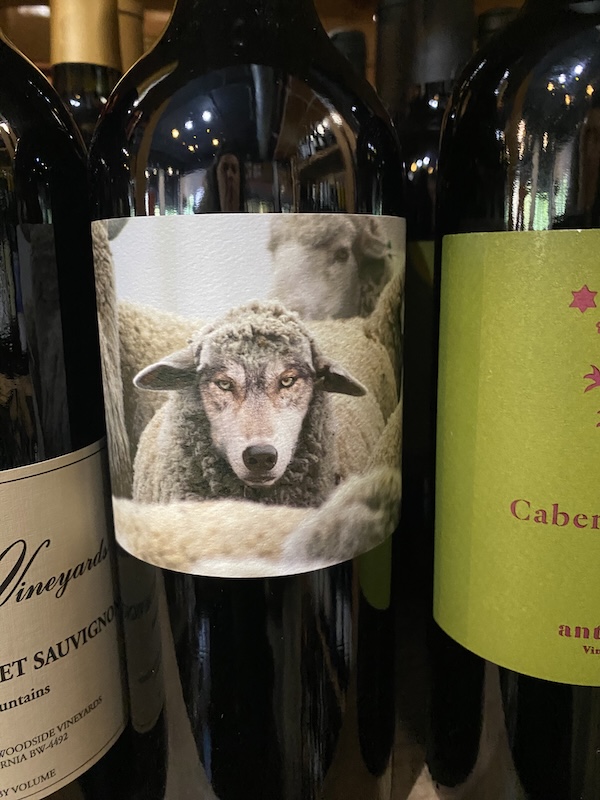
5. Do not judge him by how others use his name
This is the one that I continually struggle with. I cannot for the life of me understand why God lets people do evil in his name. And I will leave it at that because I have no answer.
Won’t Ihen you see the phrase in the Bible, “For my name’s sake,” pay attention. Hebrews 6:13 says God swore by his own name because there was none greater. Blasphemy of the Holy Spirit is unforgivable, and most people try to reconcile “unforgivable” by saying it means rejecting the call of God even to the point of death, so you’re dead and your chance is over. But I wonder… is it not more serious than we realize when people blaspheme God’s name by falsely attributing good and evil to the point of drawing others away from him?
If people profane his name by committing atrocities and justifying it because they are “chosen,” the answer is not to cover it or look away. And it isn’t to decorate God’s actions with half-truth rationalizations. Elizabeth Eliot had a problem with the way Christians try to make God look good to defend him and said the way they fluff him is specifically a problem with Christian fiction. P. 126 & 129 Being Elizabeth by Ellen Vaughn.
It seems like many would rather protect the image of God than bear the image of God, especially when it is maligned. And protection is only needed if you do not believe he can protect his own name.
The problem of sin
The problem of sin/pain is a problem of free will and how we think God should deal with both.
Hold the tension of when Peter was indignant/ashamed/confused that Christ had de-robed and kneeled down to wash Peter’s feet. Like in so many other places, I’m glad here, Peter didn’t throw away his challenge, pretending he could see clothes.
I’m finishing a Lenten devotional this week called 40 Days of Decrease by Alicia Britt Chole. She highlights that at the Last Supper Jesus washed the feet of a betrayer, a denier, and ten deserters. He held the bread and wine out to each one, anyway.
Whether you are one of the ones who anointed him for burial weeks before, or you sit at this feast with questions and decisions—everything hangs on how you judge God.
And this is the point where we cannot cling without the grip of faith for parts yet unfulfilled or misunderstood. You can read the Bible prepared to be cranky when God eats and when he fasts—or you can look searching his loyal love. But we don’t need to pretend we see the emperor’s new clothes. Our naked king removed his own clothing and invites you to look upon him.
“God‘s character and conduct aught to win faith, not to be sustained by faith against appearances.” One of the essays in Rethinking Hell reiterates the invitation to a fallen world to judge who he is. “…we may be sure that the judge of the earth will do right, not merely in his own eyes, but in those of all his intelligent creation.” P. 199-201.
Chole also wrote in 40 Days of Decrease that the last time Judas spoke to Jesus he called him “Rabbi.” And the last time Jesus spoke to Judas, he called him “Friend.” The author explains, she remains “in that messy place theologically where God’s Sovereignty and human freewill co-exist.” P. 137.
I’m sorry that you came all this way and will not leave you with a tidy conclusion—save, trust the author to the end of the story. Confounding chapters of his grace play out everywhere you look—when you aren’t trying to write them.